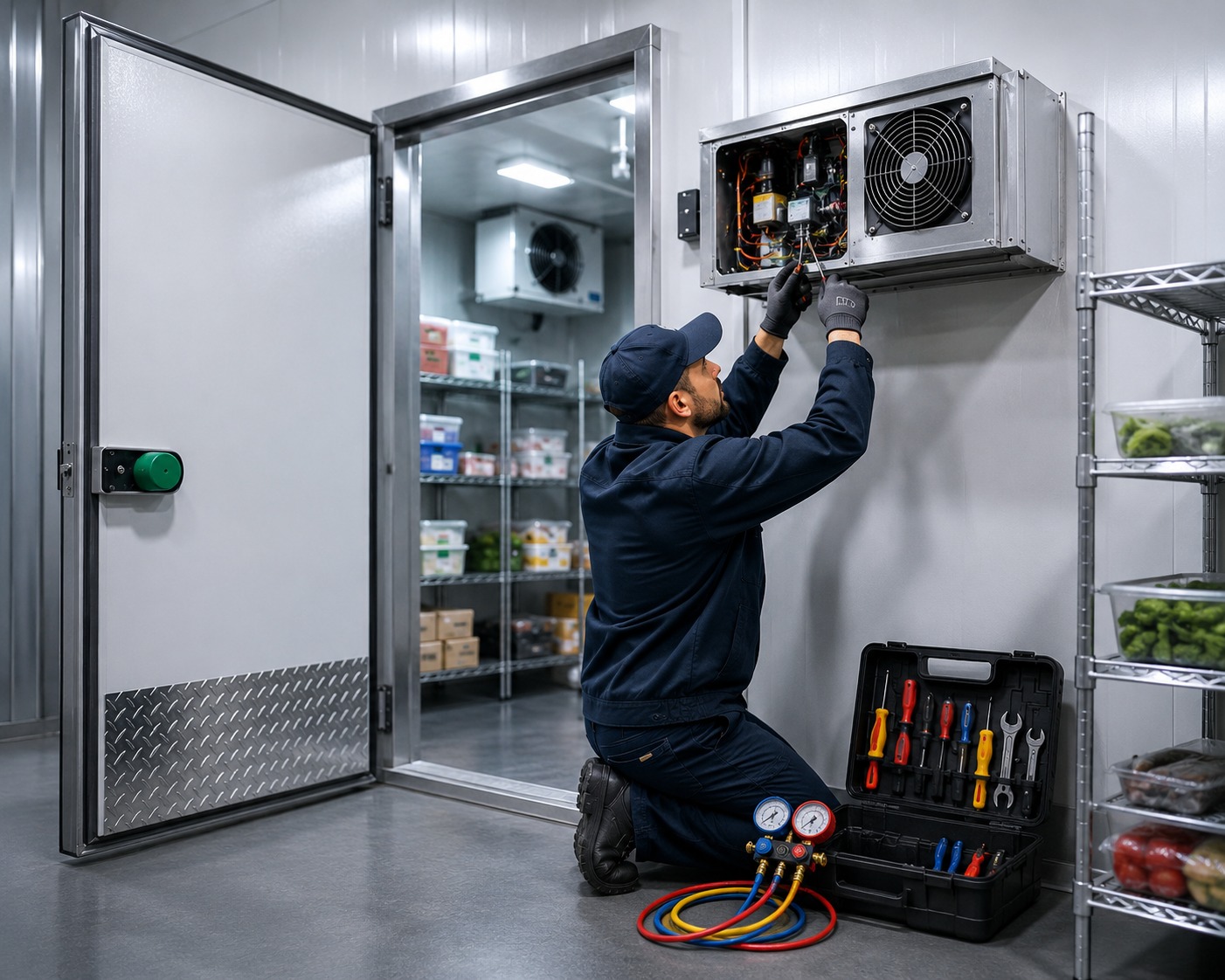
A commercial walk-in freezer is essential equipment for restaurants, grocery stores, hotels, supermarkets, catering companies, and other businesses that rely on frozen inventory. When it stops working correctly, the problem can quickly affect food safety, product quality, energy costs, and daily operations. Using Professional Commercial Walk-In Freezers Repair services can help businesses identify the cause of refrigeration problems, restore stable temperatures, and prevent minor issues from developing into expensive failures.
Commercial walk-in freezers operate for long hours and use several connected components, including compressors, condensers, evaporators, fans, controls, defrost systems, insulated panels, and doors. Because these parts depend on one another, a fault in one area can reduce the performance of the entire system.
Why Commercial Walk-In Freezer Repair Matters
A malfunctioning walk-in freezer can create immediate operational and financial risks.
Protecting Inventory
A single freezer may contain a large quantity of meat, seafood, prepared food, dairy products, or other temperature-sensitive stock. If temperatures rise for too long, some products may no longer be usable. Prompt repair can reduce the risk of unnecessary inventory loss.
Maintaining Food Safety
Food businesses need reliable temperature control. If a freezer cannot maintain the required temperature, staff may need to evaluate stored products and follow applicable food-safety procedures.
Reducing Business Disruption
A freezer failure can interrupt deliveries, food preparation, storage, and normal service. In severe cases, products must be moved to another unit or off-site storage. Fast professional repair can help restore normal operations sooner.
Preventing Larger Repairs
Small problems can place extra strain on major components. Dirty condenser coils, for example, may force the compressor to operate longer. A damaged door gasket can allow warm air into the freezer, increasing frost and system workload. Early repair can prevent avoidable secondary damage.
How a Commercial Walk-In Freezer Works
Understanding the main components makes common problems easier to recognize.
Compressor
The compressor circulates refrigerant through the system. If it develops electrical or mechanical problems, the freezer may struggle to reach temperature, cycle repeatedly, or stop cooling.
Condenser
The condenser releases heat collected from inside the freezer. Dust, grease, and debris can reduce airflow and heat transfer, forcing the refrigeration system to work harder.
Evaporator
The evaporator absorbs heat inside the walk-in box. Fans move cold air through the space. Frozen coils, failed fan motors, or blocked airflow can cause uneven temperatures and poor cooling performance.
Thermostat and Controls
Thermostats, sensors, controllers, and alarms regulate temperature and system operation. A failed sensor or control can produce symptoms similar to a mechanical refrigeration problem, so proper testing is important.
Most Common Commercial Walk-In Freezer Problems
Freezer Is Not Cold Enough
One of the clearest signs of trouble is a freezer that cannot maintain its normal temperature.
Possible causes include:
- Dirty condenser coils
- Low refrigerant
- Refrigerant leaks
- Failed fans
- Restricted airflow
- Faulty temperature controls
- Compressor problems
- Damaged door gaskets
Employees can first check whether the door closes properly, confirm that products are not blocking airflow, and verify the temperature setting. If the problem continues, professional inspection is recommended.
Excessive Frost or Ice Buildup
Heavy or recurring ice may indicate:
- Defrost heater or control failure
- Damaged door seals
- Warm, humid air entering the freezer
- Blocked drains
- Evaporator fan problems
Too much ice can restrict airflow through the evaporator and reduce cooling capacity.
Freezer Runs Constantly
Commercial units naturally run for long periods, but a noticeable increase in compressor runtime may signal dirty coils, door leakage, refrigerant issues, high ambient temperatures, or mechanical wear.
Unusual Noises
New grinding, buzzing, clicking, rattling, or squealing sounds may come from a fan motor, compressor, relay, bearing, or loose component. Early inspection can prevent a minor mechanical issue from becoming a larger failure.
Water or Condensation
Water around the freezer may result from a blocked drain, melting ice, condensation, door leaks, or defrost problems. The source should be identified instead of repeatedly cleaning up the water.
Walk-In Freezer Problems, Causes, and Recommended Actions
| Problem | Possible Cause | Recommended Action |
|---|---|---|
| Temperature too high | Dirty condenser, fan failure, refrigerant issue, or door leak | Check airflow and doors, then arrange professional diagnosis |
| Heavy frost | Defrost failure, damaged gasket, or excess moisture | Inspect seals and test the defrost system |
| Compressor runs constantly | Dirty coils, air leaks, or refrigeration problem | Inspect coils, doors, fans, and system performance |
| Water on floor | Blocked drain, condensation, or melting ice | Inspect drainage and identify the moisture source |
| Loud noises | Fan, compressor, bearing, or loose part | Inspect mechanical and electrical components |
| High energy use | Dirty coils, worn parts, or door leaks | Schedule maintenance and efficiency checks |
Similar symptoms can have different causes. Professional diagnostics help avoid unnecessary part replacement and focus repairs on the actual fault.
Warning Signs Your Walk-In Freezer Needs Repair
Businesses should pay attention to changes in normal freezer operation. Common warning signs include:
- Rising internal temperatures
- Products becoming softer
- Heavy frost or ice
- Water around the unit
- Continuous compressor operation
- Frequent cycling
- Unusual noises
- Condensation near doors
- Damaged gaskets
- Higher electricity use
- Repeated temperature alarms
- Burning or electrical odors
A fan, gasket, sensor, or airflow issue may be relatively inexpensive to correct when detected early. If ignored, it can increase stress on the rest of the refrigeration system.
What Happens During Professional Walk-In Freezer Repair?
Initial Inspection
A technician usually begins by reviewing the symptoms and checking internal temperature, door seals, ice buildup, coil condition, fan operation, and system controls.
Electrical Diagnostics
Commercial refrigeration systems use relays, contactors, capacitors, motors, wiring, sensors, and safety devices. Electrical testing can determine whether a control problem is responsible for symptoms that might otherwise be mistaken for compressor or refrigerant failure.
Refrigeration System Testing
Technicians may measure system pressures and temperatures to evaluate refrigerant flow, compressor performance, and heat transfer. These readings can help identify refrigerant loss, restrictions, poor condenser performance, or other refrigeration problems.
Repair and Final Testing
After the cause is identified, the faulty component can be repaired or replaced. The technician should then test the system to confirm stable temperature, correct cycling, and normal operation.
Emergency Commercial Walk-In Freezer Repair
Some situations need immediate attention, especially when inventory is at risk.
Urgent problems can include:
- Complete cooling failure
- Rapidly increasing temperatures
- Burning electrical smells
- Repeated breaker trips
- Major refrigerant problems
- Compressor failure
- Water near electrical components
If a freezer suddenly stops working:
- Verify the internal temperature.
- Keep the door closed as much as possible.
- Record temperature readings.
- Contact a commercial refrigeration technician.
- Prepare alternative cold storage if available.
- Follow food-safety procedures for affected products.
Avoid repeatedly opening the door, because each opening allows additional warm air into the freezer.
Repair vs. Replacement: Which Is Better?
When Repair Makes Sense
- The freezer is otherwise in good condition
- The faulty part is replaceable
- Parts are readily available
- Repair cost is reasonable
- Energy use remains acceptable
- The system still meets business needs
When Replacement May Be Better
- Breakdowns are frequent
- Major components repeatedly fail
- The unit is obsolete
- Parts are difficult to find
- Energy consumption is unusually high
- Insulation or structural panels are deteriorating
- The system no longer has enough capacity
- Repair costs are approaching replacement cost
The decision should consider repair history, overall condition, operating cost, reliability, and future business needs.
Preventive Maintenance for Commercial Walk-In Freezers
Routine maintenance can reduce emergency repairs and help equipment operate more efficiently.
Clean Condenser Coils
Dust and grease reduce heat transfer. Condenser coils should be inspected and cleaned at an interval appropriate for the environment. Units near cooking equipment may need more frequent cleaning.
Inspect Door Gaskets
Check gaskets for cracks, tears, loose sections, hardening, or gaps. Even a small leak can allow warm air and moisture into the freezer.
Keep Airflow Clear
Do not stack boxes directly in front of evaporator fans or coils. Cold air needs space to circulate throughout the freezer.
Monitor Temperatures
Regular temperature records make gradual performance changes easier to detect. Digital monitoring systems can also provide alerts when temperatures move outside the expected range.
Check for Ice and Drainage Problems
Recurring ice buildup should be investigated. Blocked drains, failed defrost components, damaged seals, or airflow problems can all contribute.
Schedule Professional Maintenance
A professional inspection may include the condenser, evaporator, fans, electrical components, refrigerant system, defrost system, door hardware, controls, and drainage. Maintenance records are also useful for identifying recurring issues.
How to Improve Walk-In Freezer Efficiency
Businesses can reduce unnecessary energy use with a few practical habits:
- Keep doors closed whenever possible
- Replace damaged gaskets
- Keep condenser coils clean
- Avoid blocking evaporator airflow
- Do not overload the freezer
- Monitor temperature settings
- Correct unusual frost buildup quickly
- Investigate sudden increases in energy use
A freezer that begins running much longer than normal may be compensating for an airflow, door, condenser, control, or refrigeration problem.
How to Choose a Commercial Freezer Repair Company
Commercial Refrigeration Experience
Choose technicians with experience servicing walk-in freezers, walk-in coolers, and commercial refrigeration equipment rather than relying only on residential appliance experience.
Diagnostic Capability
A qualified technician should identify the source of the problem before recommending expensive replacement parts. Diagnosis may involve electrical tests, pressure checks, temperature measurements, and airflow inspection.
Emergency Availability
For businesses with valuable frozen inventory, access to urgent service can be important because refrigeration failures do not always happen during convenient hours.
Clear Communication
A good service provider should explain what failed, what likely caused it, which repair is recommended, and whether other components need attention. Clear information helps business owners make better repair and replacement decisions.
Businesses That Depend on Reliable Walk-In Freezers
Walk-in freezers are widely used by:
- Restaurants
- Grocery stores
- Supermarkets
- Hotels
- Convenience stores
- Bakeries
- Cafeterias
- Catering companies
- Hospitals
- Schools
- Commercial kitchens
- Food production facilities
- Warehouses
Although operating conditions differ, each of these businesses depends on stable temperatures and dependable refrigeration.
Frequently Asked Questions About Commercial Walk-In Freezer Repair
Why is my commercial walk-in freezer not getting cold?
Possible causes include dirty condenser coils, refrigerant problems, failed fans, blocked airflow, thermostat faults, compressor issues, defrost problems, or damaged door gaskets. A technician can determine the exact cause.
Why does my walk-in freezer keep freezing up?
Recurring ice can result from a defective defrost system, damaged door seals, excessive moisture, poor airflow, fan problems, or blocked drainage.
How often should a commercial walk-in freezer be serviced?
Service frequency depends on operating hours, equipment design, environmental conditions, manufacturer recommendations, and workload. Busy kitchens may require more frequent cleaning and inspections.
Why does the compressor run continuously?
Possible causes include dirty coils, leaking doors, refrigerant problems, heavy product loads, high ambient temperatures, blocked airflow, or mechanical issues.
Can a refrigerant leak be repaired?
Many leaks can be repaired after the location and cause are identified. Refrigerant work should be performed by qualified professionals using appropriate tools and procedures.
How long does commercial freezer repair take?
Repair time depends on the problem and part availability. Gaskets, relays, controls, or fan motors may be relatively straightforward to replace, while compressor or refrigerant-system repairs can require more extensive work.
Should I Repair or Replace an Older Walk-In Freezer?
Consider repair history, energy use, equipment condition, part availability, and repair cost. Frequent major failures may make replacement more economical.
What Should I Do If My Walk-In Freezer Suddenly Stops Working?
Keep the door closed, verify and record the internal temperature, contact a refrigeration professional, and arrange alternative cold storage if necessary.
Conclusion
A commercial walk-in freezer is critical equipment for any business that depends on frozen or temperature-sensitive inventory. Rising temperatures, excessive frost, unusual noises, continuous compressor operation, damaged gaskets, or increasing energy use can all signal that the system needs attention.
The most effective approach combines daily temperature monitoring, proper operating practices, preventive maintenance, and timely professional repair. Early diagnosis can reduce inventory risk, limit business disruption, and prevent small defects from increasing strain on expensive components.
Because similar symptoms can have very different causes, professional testing is often the most efficient way to identify the actual fault. Consistent maintenance and prompt repair help businesses keep their walk-in freezers reliable, efficient, and ready for daily commercial use.