
The modern architectural visualization landscape requires a level of technical precision that extends far beyond simple aesthetic appeal. In high pressure studio environments, the reliability of a project depends on the quality of the underlying digital components. For engineers and designers, the selection of assets is a critical phase that directly impacts render stability and production timelines. Many leading professionals now rely on https://3drush.com to source their foundational geometry. This technical analysis explores how the internal structure of digital assets defines the success of complex visualization projects.
Geometric Integrity and Path Tracing Accuracy
The core of any photorealistic image is the interaction between light and geometry. Every object in a scene is a mathematical construct that must be interpreted by a rendering engine. When a studio utilizes high quality 3D models, they are providing the engine with clean and optimized data. This is essential for modern path tracing algorithms which require perfect surface normals to calculate light bounces correctly.
Poorly constructed assets often feature overlapping faces or inverted normals that cause visible artifacts in the final render. These errors lead to significant delays as artists must manually repair the geometry before the project can proceed. Professional assets are built with topological purity, ensuring that every edge and vertex is placed with mathematical intent. This level of precision allows for the soft gradients and realistic contact shadows that define a high end architectural render.
Workflow Automation with QuickMerge
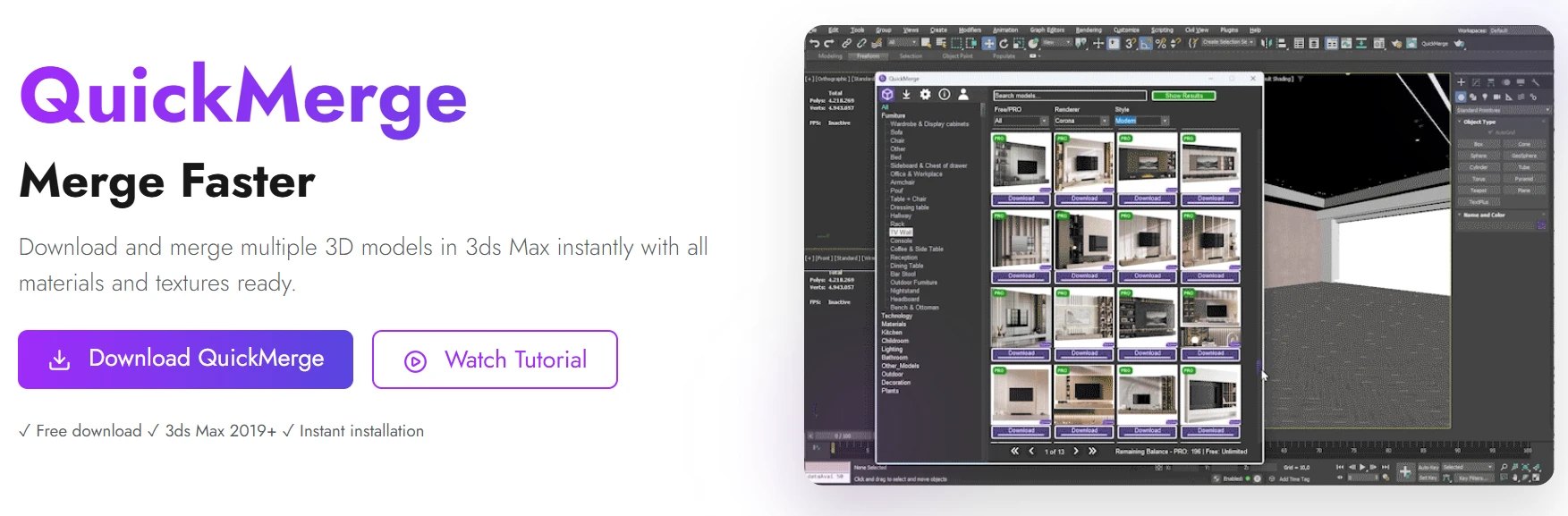
Even with perfect geometry, the manual management of external files remains a significant bottleneck in the 3D pipeline. The process of merging objects and relinking textures can consume hours of billable time. To solve this problem, professional ecosystems have introduced intelligent bridges like the QuickMerge plugin. This tool automates the integration of assets directly into the 3ds Max environment, handling all background logistics such as texture pathing and material assignment.
Automation at this level ensures that the technical integrity of a scene is maintained from the first import to the final frame. By removing the need for manual file management, studios can focus their resources on artistic direction and lighting. This synergy between curated data and intelligent software is what allows modern firms to handle increasingly complex projects without sacrificing quality or stability.
The Economics of Technical Optimization
The financial success of a visualization project is closely tied to system performance. Unoptimized assets consume excessive amounts of memory, leading to slow viewport navigation and potential system failure during the render phase. Professional assets are designed with a strict focus on polygon efficiency, providing the maximum level of detail with the minimum computational load.
This optimization is particularly vital for large scale commercial projects where hundreds of objects must be managed simultaneously. A scene built with optimized components remains fluid and responsive, allowing for rapid iterations and client reviews. Investing in technically sound assets is a strategic decision that reduces the total cost of production by eliminating technical debt and maximizing hardware efficiency.
Conclusion: The New Standard for Digital Production
The conclusion for any professional studio is clear: the path to elite visualization starts with the quality of the digital building blocks. By prioritizing geometric purity and embracing automated integration, designers can overcome the technical barriers that traditionally slow down project delivery.
We invite you to experience a more efficient way of working. By combining the professional resources available at https://3drush.com/ with advanced tools such as QuickMerge, you can transform your creative process into a streamlined production pipeline. Discover how our curated 3D models can provide the technical stability and visual excellence your projects deserve. The future of architectural visualization is built on precision; make sure your assets are up to the standard.
This analysis is part of our series on the technical evolution of architectural design. For more information on geometry standards and automated studio tools, visit our professional resource center.